Laparoscopic Paraesophageal Hernia Repair: This is an advanced method of treatment for complex hernias in which a portion of the stomach protrudes through the diaphragm and accompanies the esophagus. Unlike hiatal hernias, in paraesophageal hernias, the stomach protrudes into the chest, creating a life-threatening condition in which the stomach can twist and cut off its blood supply, requiring urgent medical attention.
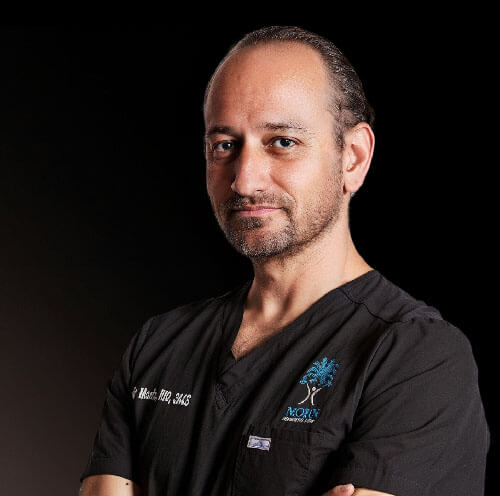
At our Los Angeles clinic, Dr. Babak Moein and his multidisciplinary team provide expert, patient-centered care for paraesophageal and hiatal hernias. We combine advanced diagnostics (endoscopy, pH monitoring, and esophageal motility testing) with minimally invasive laparoscopic repair techniques to reduce pain, shorten hospital stay, and speed recovery.
Types of Paraesophageal Hernias
Understanding Hiatal & Paraesophageal Hernia
Type II (True Paraesophageal)
Gastresophageal junction in normal location with herniation of stomach fundus through the diaphragm.
Type III (Mixed)
Both sliding and paraesophageal components are present; this is the most frequent type.
Type IV (Complex)
Other organs, including colon, spleen, or small bowel, may also herniate into the chest.
Paraesophageal Hernia Symptoms
Don't Wait - Paraesophageal Hernias Worsen Over Time
Unlike other hernias, paraesophageal hernias rarely improve without surgery and carry serious risks of life-threatening complications.
Schedule Immediate Evaluation
Advanced Laparoscopic Surgical Techniques
Dr. Moein's Specialized Approach
With over 20 years of experience in Los Angeles and Beverly Hills, Dr. Moein employs the most advanced laparoscopic techniques for paraesophageal hernia repair:
- Complete Hernia Sac Reduction: Careful mobilization and reduction of all herniated organs back into the abdominal cavity
- Crural Repair: Strengthening the diaphragmatic opening with non-absorbable sutures
- Mesh Reinforcement: When indicated, use biological or synthetic mesh for additional support
- Fundoplication: Anti-reflux procedure to prevent post-operative GERD
- Short Gastric Division: Complete mobilization of the stomach for tension-free repair
Recovery and Outcomes of Paraesophageal Hernias Surgery
Recovery from a paraesophageal hernia procedure is usually gradual but quite easily tolerated. Most patients find that there is a notable reduction in pressure, reflux symptoms, difficulty swallowing, and discomfort after eating as healing progresses. In some cases, patients are urged to ambulate soon after surgery, take a gradual diet from liquids or soft foods, and abstain from lifting for a few weeks to allow proper healing of the diaphragm and stomach. Mild bloating, tightness in swallowing, or reduced appetite are possible during the initial stages of healing. However, these are usually temporary.
Dr. Babak Moein, MD: Advanced Laparoscopic Surgeon in Los Angeles
With over 20 years of surgical experience, Dr. Moein serves Los Angeles and Beverly Hills with exceptional expertise in complex paraesophageal hernia repair, ensuring optimal outcomes through advanced minimally invasive techniques.
- Specialized Training: Fellowship-trained with specific expertise in complex foregut surgery
- High-Volume Experience: Over 20 years performing paraesophageal hernia repairs in Los Angeles
- Advanced Technology: State-of-the-art laparoscopic surgical equipment
- Emergency Availability: 24/7 access for urgent consultations and emergency surgery
- Comprehensive Team: Anesthesiologists and nurses specialized in foregut surgery
- Century City Location: Convenient access from across Los Angeles
- Insurance Accepted: Working with most major insurance plans for coverage
Dr. Moein provides specialized care using advanced laparoscopic techniques for complex hernia repairs, ensuring optimal outcomes and faster recovery. Book your consultation today to take a crucial step toward safe, effective treatment and lasting relief.
Paraesophageal Hernias Require Expert Care
These complex hernias demand surgical expertise and cannot be safely managed conservatively. Dr. Moein's specialized approach ensures the best possible outcomes.
Get Expert Consultation
Questions patients ask
What is the difference between a hiatal hernia and a paraesophageal hernia?
A hiatal hernia is a general term for the stomach moving upward through the diaphragm into the chest. A paraesophageal hernia is a specific type of hiatal hernia in which part of the stomach pushes up next to the esophagus rather than sliding in a more typical way. Paraesophageal hernias may carry a greater risk of complications, including pain, obstruction, or stomach twisting, and may require more urgent surgical attention.
Is paraesophageal hernia surgery performed laparoscopically?
Yes, many paraesophageal hernia repairs can be performed laparoscopically. A minimally invasive approach often allows for smaller incisions, less pain, shorter hospital stays, and faster recovery. However, the final surgical approach depends on the patient’s anatomy, the size of the hernia, and whether the case is recurrent or more complex.