Hiatal hernia surgery in Los Angeles is a highly effective solution for patients suffering from chronic heartburn, acid reflux, and persistent chest discomfort caused by a hiatal hernia. When these symptoms begin to interfere with daily life, surgical treatment is often the most reliable way to achieve long-term relief.
Dr. Moein, an experienced general surgeon at General Surgery LA, uses the most up-to-date minimally invasive laparoscopic surgical techniques to achieve the best clinical results and help patients recover more quickly.
We customize your procedure based on your unique anatomy and symptoms using our top-level strategy, which includes detailed diagnostic testing, such as endoscopy, pH testing, and, if appropriate, esophageal motility testing, to inform our approach.
What is a Hiatal Hernia?
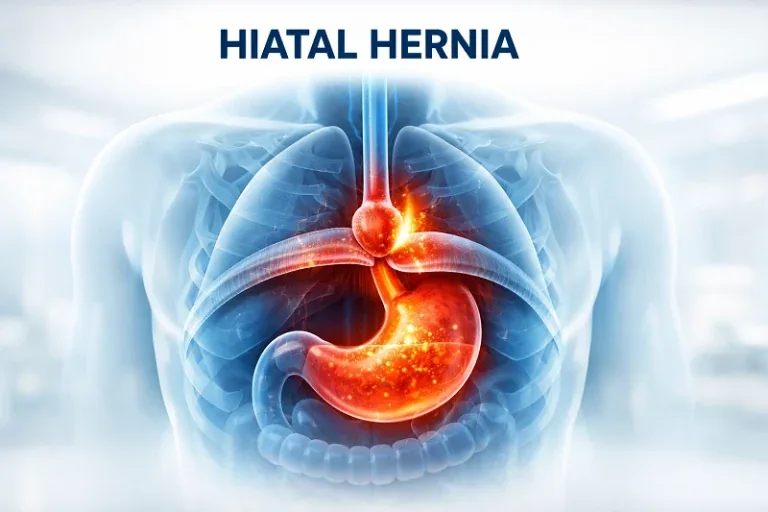
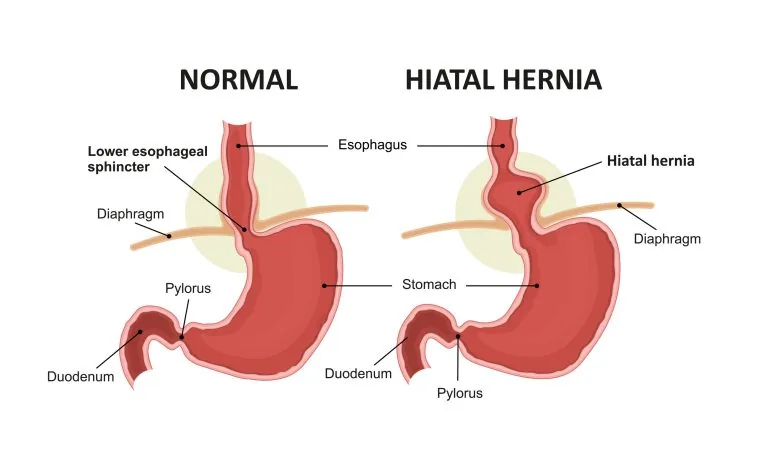
A hiatal hernia occurs when some part of your stomach pushes through your diaphragm into the chest cavity. The condition is experienced by millions of Americans and can lead to severe pain, among other health concerns, if left unchecked.
There are two main types of hiatal hernias:
- Sliding Hiatal Hernia (Type I): Most frequent type, with the stomach sliding through the hiatal hole in an up-and-down fashion
- Paraesophageal Hernia (Type II-IV): High-risk type in which part of the stomach is trapped above the diaphragm
Hernia Symptoms That May Indicate You Need Surgery
- ✔ Severe Heartburn & Acid Reflux: Disrupts sleep and significantly affects eating habits.
- ✔ Chest Pain: High-severity symptom that can often mimic heart attack symptoms.
- ✔ Difficulty Swallowing: A critical issue that can make eating uncomfortable or impossible.
- ✔ Regurgitation of Food: Often leads to social embarrassment and nutritional concerns.
- ✔ Shortness of Breath: Severely limits physical activity and daily performance.
- ✔ Feeling Full Quickly: Increases the risk of unintended weight loss and malnutrition.
Don't Let a Hernia Hold You Back
Take the first step toward a pain-free life with Dr. Babak Moein. Our team provides expert,
minimally invasive hernia repairs tailored to your specific needs.
SCHEDULE CONSULTATION
Our Advanced Surgical Approaches
Laparoscopic Fundoplication
Our preferred method for most hiatal hernia repairs. This minimally invasive technique involves:
- 5 small incisions instead of one large cut
- High-definition camera guidance for precision
- Wrapping the upper part of the stomach around the esophagus to prevent reflux
- Repairing the hiatal opening to prevent recurrence
Your Hiatal Hernia Surgery Journey
Embark on a clear path to recovery under the specialized care of Dr. Babak Moein. Our process prioritizes minimally invasive techniques, such as laparoscopic repair, to ensure maximum precision and a faster return to your daily life.
From thorough pre-surgery evaluation to expert post-operative support, we provide a personalized experience focused on your long-term health and comfort.
Pre-Surgery Preparation
- Comprehensive medical evaluation
- Imaging studies including CT scans and endoscopy
- Personalized surgical planning with Dr. Babak Moein
- Nutritional counseling to ensure optimal healing
Surgery Day Experience
- Procedures typically completed within 2-3 hours
- Expert anesthesia team for maximum safety
- Most patients benefit from same-day or overnight stays
- Advanced pain management for a comfortable experience
Recovery Timeline
Under Dr. Babak Moein's care, most patients return to work within 1-2 weeks. Light activities resume within a week, while a full return to normal physical routines is expected within 4-6 weeks.
Why Choose Dr. Moein?
With years of experience and hundreds of successful repairs, Dr. Babak Moein uses mostly laparoscopic techniques. This approach ensures minimal scarring, less trauma, and superior long-term results.
Benefits of Choosing General Surgery LA
With over 20 years of surgical experience, Dr. Moein has established himself as a leading surgeon serving Los Angeles and Beverly Hills. His extensive expertise in minimally invasive techniques, combined with hundreds of successful hiatal hernia repairs, ensures you receive the highest standard of care.
Dr. Moein's minimally invasive approach focuses on durable repair, optimal healing, and minimal scarring for patients throughout the greater Los Angeles area.
Contact General Surgery LA to schedule your consultation with Dr. Moein and experience expert care backed by decades of surgical excellence and precision.
Specialized Expertise
Dr. Babak Moein is a board-certified general surgeon who has performed hundreds of successful hernia repairs with excellent outcomes and low complication rates.
Minimally Invasive Focus
Using laparoscopic techniques, Dr. Babak Moein prioritizes procedures that minimize scarring, reduce post-operative pain, and significantly speed up the recovery process.
Comprehensive Care
From the initial diagnostic evaluation to the final stages of recovery, Dr. Babak Moein provides complete surgical care with personalized attention tailored to each patient's specific needs.
Fast Recovery Timeline
Under the expert care of Dr. Babak Moein, most patients are able to return to work within 1-2 weeks and resume all normal physical activities within 4-6 weeks.
Hiatal Hernia Surgery FAQ
1. Is hiatal hernia surgery covered by insurance?
Yes, when medically necessary, hiatal hernia surgery is typically covered by most insurance plans, including Medicare and Medicaid. Our team will help verify your coverage and work with your insurance provider.
2. How long does the surgery take?
Most laparoscopic hiatal hernia repairs take 2-3 hours. Complex or revision cases may take longer.
3. What are the risks of surgery?
As with any surgery, there are risks including bleeding, infection, and anesthesia complications. However, laparoscopic hiatal hernia repair has a very low complication rate (less than 5%) when performed by experienced surgeons.
4. Will I be able to eat normally after surgery?
Yes, most patients can return to a normal diet within 4-6 weeks. Initially, you'll progress from liquids to soft foods, then gradually add regular foods back.
5. Can hiatal hernias come back after surgery?
Recurrence rates are very low (less than 5%) when surgery is performed properly. Our techniques focus on durable repair to minimize recurrence risk.
Watch Dr. Moein explain it
Hiatal hernia surgery explained by Dr. Moein
What is a hiatal hernia and how is it treated?
Is it really acid reflux?
Questions patients ask
What are some weird symptoms of a hiatal hernia?
In addition to heartburn and reflux, a hiatal hernia can sometimes cause less obvious symptoms. These may include chest pressure, chronic cough, throat irritation, hoarseness, frequent burping, difficulty swallowing, a feeling of fullness after small meals, shortness of breath, or discomfort that feels similar to heart-related symptoms. Because these symptoms can overlap with other conditions, a proper evaluation is important.
What size hiatal hernia needs surgery?
The size of a hiatal hernia is only one factor in deciding whether surgery is needed. In many cases, surgery is recommended based more on symptoms, severity of reflux, swallowing problems, pain, or the risk of complications than on size alone. Larger hiatal hernias are more likely to require repair, especially if they cause persistent symptoms or if part of the stomach moves significantly into the chest.
When is hiatal hernia surgery necessary?
Hiatal hernia surgery may be necessary when symptoms are severe, persistent, or not controlled with medication and lifestyle changes. It may also be recommended when there is significant reflux, difficulty swallowing, chest discomfort, anemia, or concern for complications related to a larger hernia. The decision is based on both symptoms and anatomical findings.